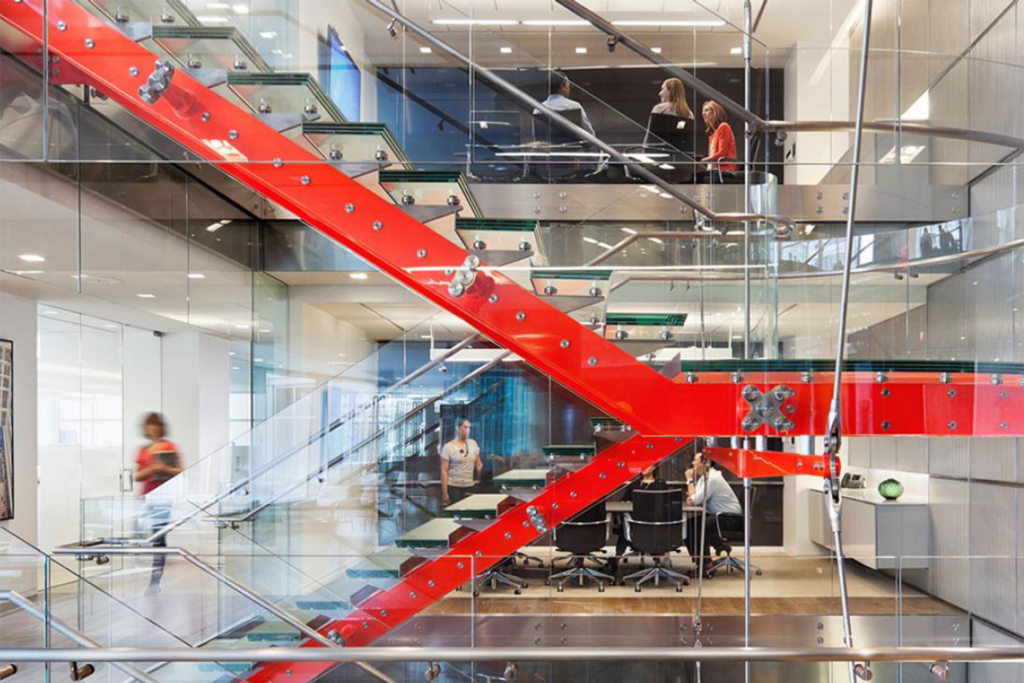
JBG Smith Feature Staircase
Washington DC, USA
“A Floating Staircase Designed as Functional Sculpture”.
Organisation
Rogers Stirk Harbour + Partners
Role
Technical Designer
Responsibilities
Concept Design Development
Detailed Design Development
Technical Detailing
Construction Documentation
Construction Sequencing
Specification Development Support
Fabrication Coordination
Design Team Coordination
Quality Review
Sector
Commercial Interiors
Status
Constructed
Year
2013
Commissioned as the centrepiece of a new corporate headquarters in Washington DC, this striking staircase was conceived as both a means of circulation and a sculptural focal point within the workplace.
Developed by Richard Rogers Stirk Harbour + Partners for JBG Smith Properties, the brief called for a distinctive architectural feature that would connect multiple floors while creating a memorable experience for staff and visitors. The ambition was to create a structure that appeared almost impossible: a staircase that seemed to float effortlessly within the volume of the building.
Working under the leadership of Amo Amo Kalsi and Dennis Austin, Nick Hancock was responsible for developing the project from concept design through detailed design and construction documentation. The role involved translating the initial design vision into a coordinated and buildable solution while maintaining the clarity and elegance of the original concept.
Responsibilities included concept development, technical detailing, construction documentation, specification development, fabrication coordination and the preparation of construction sequencing information required for installation. The project demanded close collaboration between architects, engineers, fabricators and contractors to realise a highly complex structural and architectural element.
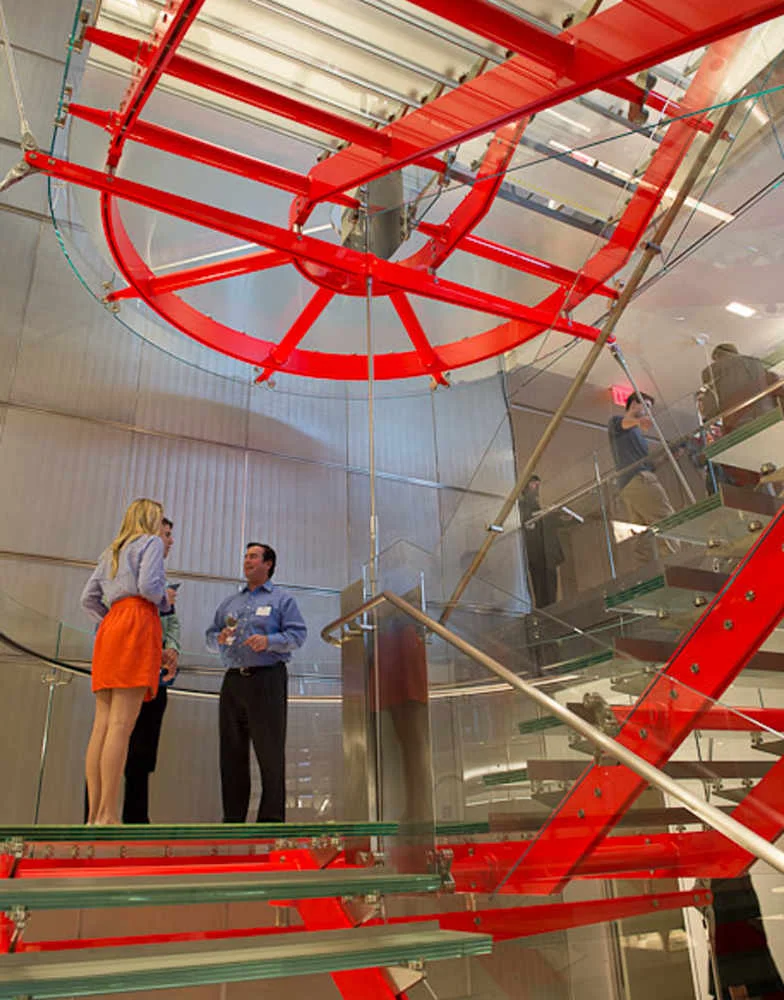
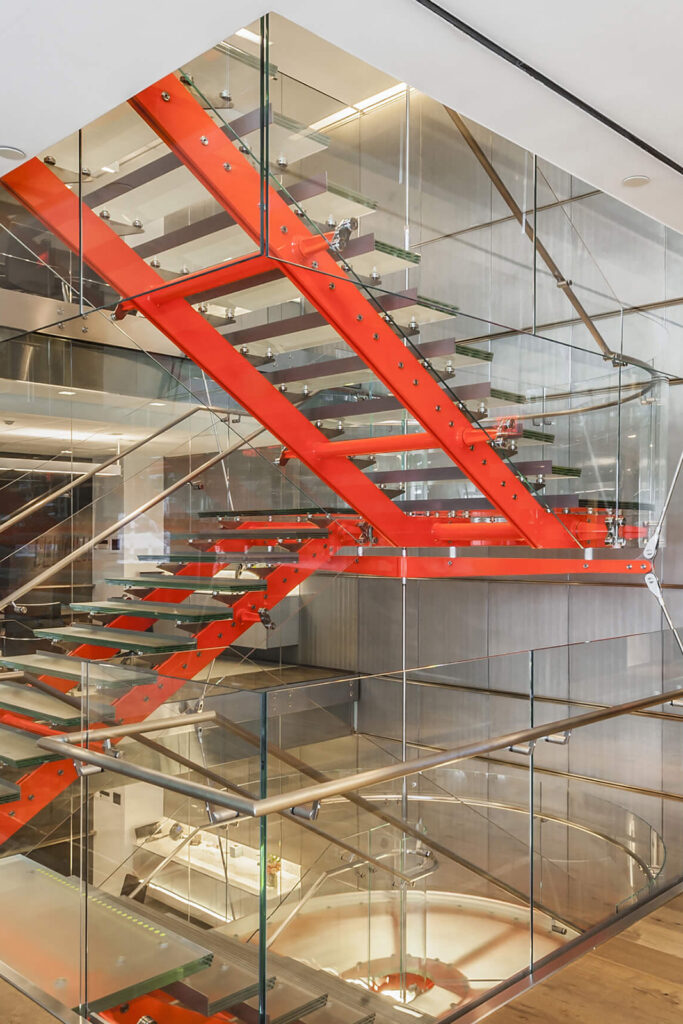
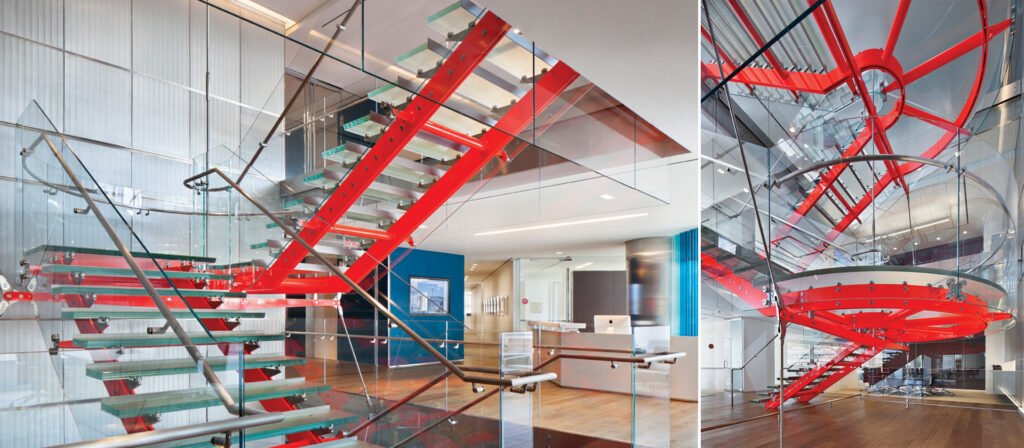
The completed staircase rises through a light-filled atrium, formed from high-gloss steel stringers supporting glass treads, landings and balustrades. A carefully engineered tension bridle system suspended from the structure above provides lateral stability while preserving the illusion of a weightless stair floating within the space.
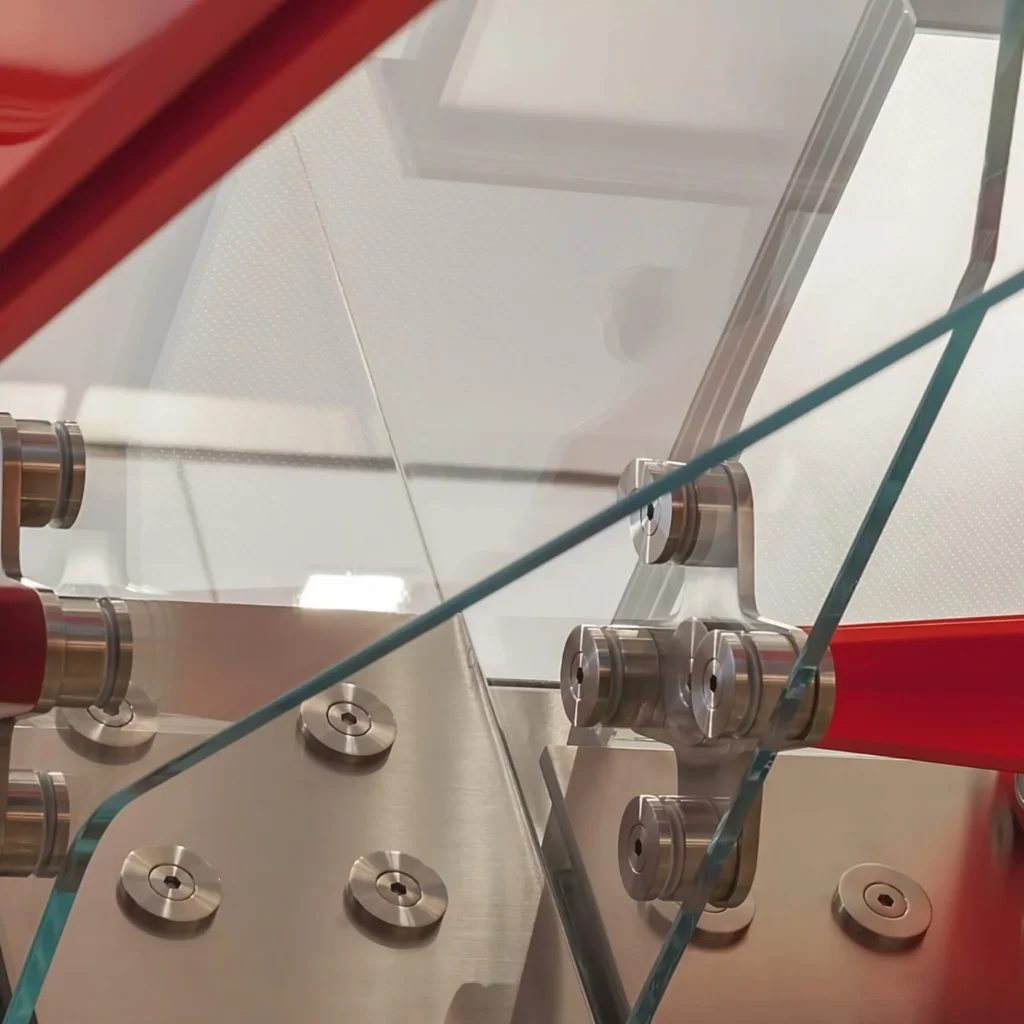
The installation incorporated more than 800 bespoke machined components and over 1,000 individual fixings, requiring extensive off-site fabrication and a carefully sequenced construction programme. Completed in 2013, the staircase remains a defining feature of the headquarters, demonstrating how architecture, engineering and fabrication can combine to transform a functional element into a piece of inhabitable sculpture.