Gasholder No. 8
Kings Corss, London, UK
“A Carboniferous Park for a Post-Carbon City”.
Client
Argent
Role
Lead Designer
Practice
Nick Hancock Design Studio
Sector
Public Realm
Cultural
Status
Competition
Scope
Concept Design
Team
Chris Haughton
Buro Happold
Studio Engleback
Leonora Openheim
Anna Maria Orru
Year
2011
Located at the heart of the King’s Cross regeneration masterplan, Gasholder No. 8 presented a rare opportunity to reimagine one of London’s most significant industrial structures as a new civic destination.
Developed in response to an international RIBA design competition, the proposal brought together a multidisciplinary team of architects, engineers, landscape architects, sustainability consultants and artists. Working within the Grade II Listed Victorian gasholder frame, the design sought to create a flexible public space that celebrated both London’s industrial heritage and its sustainable future.
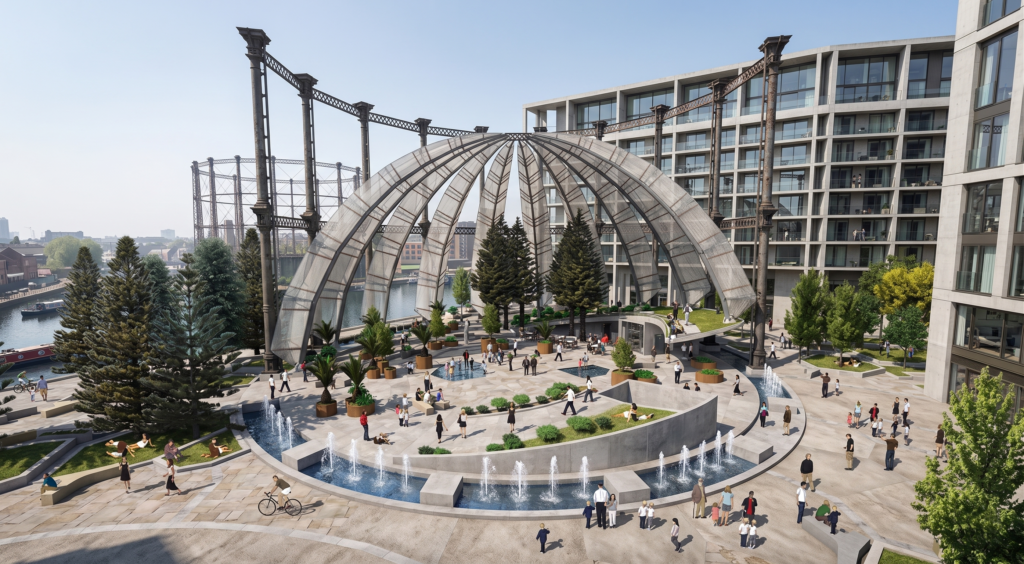
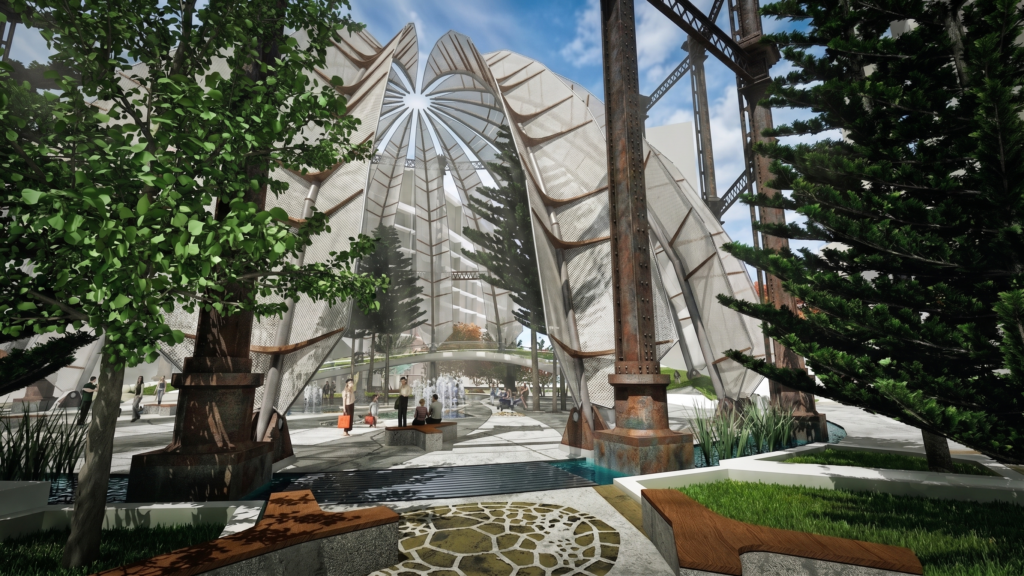
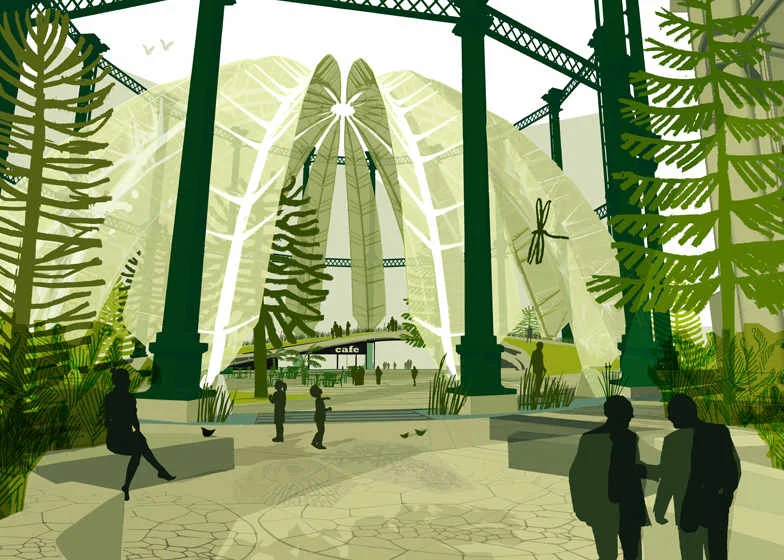
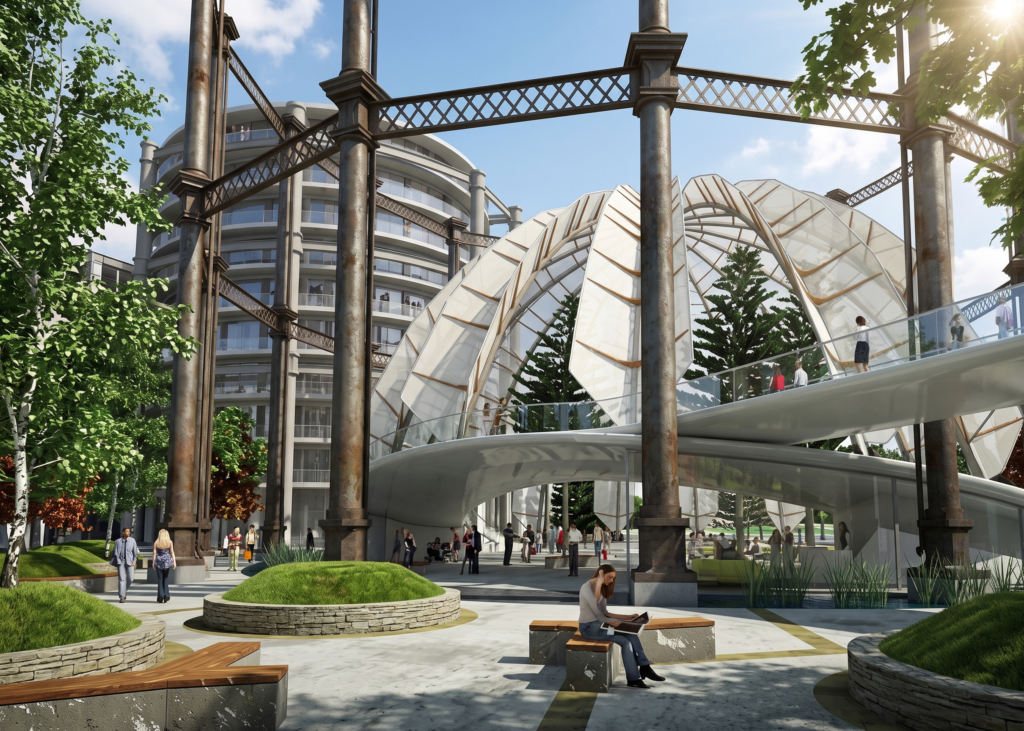
The concept drew inspiration from the Carboniferous era; the geological period responsible for the formation of the fossil fuels that powered the Industrial Revolution. A richly planted landscape of ferns, cycads and monkey puzzle trees transformed the site into a contemporary interpretation of this ancient environment, creating an immersive public park that connected visitors to the origins of energy beneath their feet.
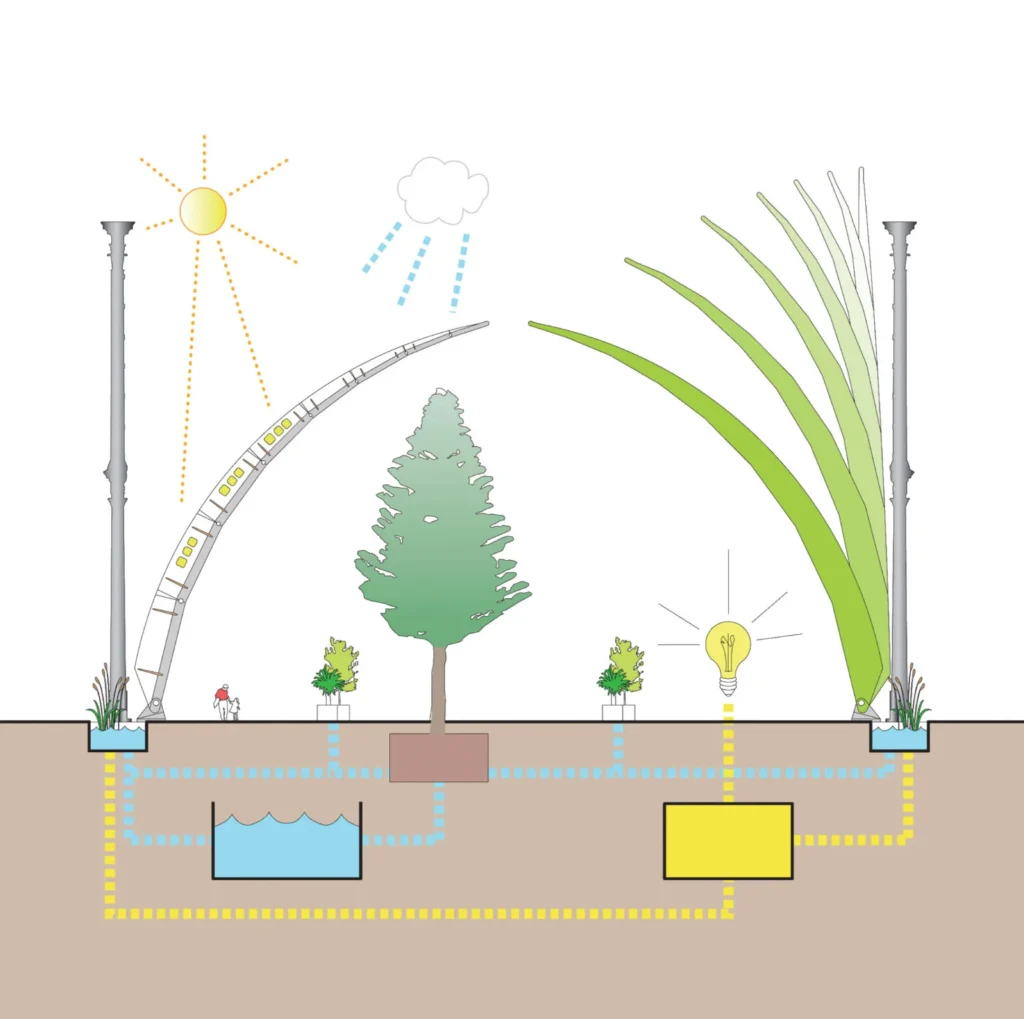
At the centre of the scheme, a sheltered amphitheatre and event space sat beneath a kinetic canopy composed of biomimetic fronds. Powered by integrated solar technology, the canopy responded to changing weather conditions and event requirements, opening and closing throughout the day while harvesting rainwater for landscape irrigation.
A gently rising landform wrapped around the perimeter of the gasholder, accommodating a café, visitor facilities and an elevated viewing terrace overlooking the adjacent canal and nature reserve. This sculpted landscape also provided informal seating for performances, screenings and public events.
Designed as a highly adaptable civic space, the park could host outdoor cinema screenings, exhibitions, cultural festivals and large-scale public events, while serving as an everyday gathering place for local residents and visitors. Through engraved paving, renewable energy technologies and interpretive landscape interventions, the project told the story of carbon, energy and transformation, linking London’s industrial past to a more sustainable urban future.
Although the proposal was not selected as the competition winner, it remains a powerful exploration of how historic infrastructure can be repurposed to create meaningful public spaces that combine ecology, culture, education and renewable technology within the contemporary city.